
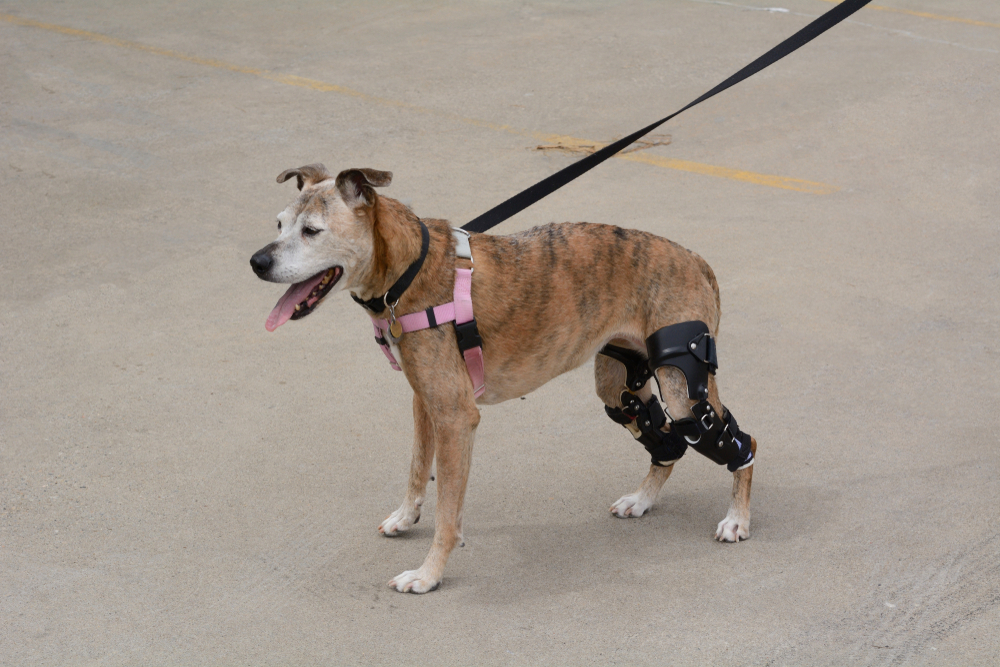
Treatment Decisions for Cruciate Ligament Rupture in Dogs
In a community where dogs work the land, hit the trails, and cover serious ground every day, a cruciate ligament injury is more than a medical setback. It disrupts daily life for the dog and the whole household. CCL injuries are among the most common orthopedic conditions we see in dogs, and getting the right treatment starts with understanding what the injury actually involves and what the path forward looks like.
At Mid-Valley Veterinary Hospital, we provide comprehensive surgical care for the rural Northern California communities around Chico, including orthopedic procedures that give working and active dogs a real shot at returning to full function. When a dog needs CCL surgery, a boarded orthopedic surgeon comes directly to our clinic to perform the procedure, so your dog gets specialist-level care without the stress of traveling far from home. If your dog is limping or favoring a back leg, contact our clinic to get them evaluated.
What Is a Cranial Cruciate Ligament Injury?
Causes and Risk Factors
The cranial cruciate ligament (CCL) is the canine equivalent of the ACL in humans and is one of the main stabilizing structures of the knee. When it tears, either partially or completely, the shin bone slides forward under the thigh bone with every step, causing pain, swelling, and progressive joint damage.
Unlike a classic sports injury in people, most CCL ruptures in dogs happen because of a combination of anatomy, gradual ligament breakdown over time, and the moments of awkward movement that are just part of being a dog. Common contributing factors include:
- Abrupt pivoting or twisting during play, especially on uneven ground
- Weekend warrior-style activity where a mostly sedentary dog suddenly runs hard
- Breed predisposition, with Labrador Retrievers, Rottweilers, Golden Retrievers, and Boxers at higher baseline risk due to their knee geometry
- Excess body weight, which puts more load on the ligament with every single step
- A partial tear that goes undetected and eventually progresses to a complete rupture
Dogs that work ranches, fetch obsessively, or cover unpredictable terrain face real exposure to these risks. Consistent conditioning and keeping weight in a healthy range make a meaningful difference. At your dog’s wellness and preventative visits, we can help you build a nutrition and exercise routine that supports joint health over the long term.
How to Recognize a CCL Injury
Signs That Something Is Wrong
CCL injuries do not always look the same. Some dogs go suddenly and dramatically lame, to the point where it is obvious something has happened. Others develop a slow, gradual limp that owners understandably chalk up to soreness or a minor sprain. That difference often comes down to whether the ligament tore all at once or in stages over time.
Signs that point toward a CCL injury rather than a minor soft tissue issue:
- Hind-limb lameness that gets worse after exercise rather than better with rest
- Trouble rising from the floor, or noticeable hesitation before jumping into the car or onto furniture
- Visible swelling along the inside of the knee
- A careful, stilted gait with just a toe touching the ground
- Sitting with the affected leg stuck out to the side rather than tucked naturally underneath
Early evaluation matters. Delaying diagnosis allows the joint to continue deteriorating, which speeds up arthritis and can turn a manageable problem into a more complicated one. Our diagnostics services include digital radiography with the option to send images to a specialist for interpretation.
How CCL Injuries Are Diagnosed
Imaging and Orthopedic Assessment
Diagnosis combines a hands-on physical exam with imaging. The drawer sign and tibial thrust test assess how much the tibia slides relative to the femur when pressure is applied. A positive result confirms ligament instability. Some dogs need sedation for these tests to be accurate, particularly if they are in pain or very tense.
Radiographic imaging identifies secondary joint changes like fluid accumulation, bone spurs, and arthritic remodeling, and helps rule out fractures or other bony issues. In more complex cases, MRI can add soft tissue detail, though referral for MRI is generally reserved for situations where standard evaluation does not give us a clear enough picture.
Surgical Options: TPLO vs. Extracapsular Repair
Which Procedure Is Right for Which Dog?
The goal of surgery is to restore functional stability to the knee and slow the progression of arthritis. When your dog needs surgery, a boarded surgeon from Summit Veterinary Specialty Center performs the procedure right here at Mid-Valley, bringing specialist expertise to your own backyard. Two approaches are used most often, and the right choice depends on your dog’s size, age, activity level, and overall health.
TPLO (Tibial Plateau Leveling Osteotomy) changes the geometry of the joint rather than replacing the ligament. The top surface of the tibia is cut and repositioned so that normal walking forces no longer cause the forward sliding that makes the intact CCL necessary. A bone plate holds everything in its new position while healing takes place. TPLO surgery consistently produces excellent functional outcomes in active dogs and is the preferred approach for medium to large breeds, working dogs, and high-activity patients.
Extracapsular repair (lateral suture technique) involves placing a strong synthetic suture outside the joint to mimic the function of the torn ligament while scar tissue forms and stabilizes the knee over time. This is a solid option for smaller or less active dogs and for patients where TPLO may carry a higher surgical risk. Extracapsular repair follows a similar recovery timeline, though long-term outcomes in larger or highly active dogs are generally not as durable as TPLO.
The surgical team will assess your dog’s specific anatomy, weight, lifestyle, and age before making a recommendation. Every surgical case at Mid-Valley includes comprehensive anesthesia monitoring and a full perioperative pain management protocol, covering pre-anesthetic and injectable pain medications as well as post-operative oral pain control.
Recovery: What the Weeks After Surgery Actually Look Like
Following the Post-Op Plan
Surgery addresses the mechanical problem. Structured recovery is what restores strength, range of motion, and confidence. Dogs that skip or rush through the recovery protocol take longer to return to normal and are more likely to re-injure or develop compensatory problems in the opposite leg. A Rehab Hind Leg Lifting Harness helps safely assist dogs with limited mobility during those early weeks.
After surgery, the Summit team provides detailed post-op instructions specific to your dog and the procedure performed. Always follow your discharge paperwork, as timelines can vary based on your pet’s injury severity and lifestyle. Make sure to keep the cone (e-collar) on at all times to prevent your pet from licking the incision or chewing their sutures; allowing them to have contact with the surgical site almost always results in an infection or even a return to surgery to repair the site. The table below reflects general return to activity guidelines only.
General Post-Surgery Activity Guidelines
| Week(s) | Activity Level |
| Weeks 1-2 | Crate or pen rest when unsupervised; leash only for bathroom breaks; incision recheck at end of week 2 |
| Week 3 | Add 5-minute leash walks 2-3 times daily; slow pace to encourage toe-touching |
| Week 4 | Increase leash walks to 10 minutes 2-3 times daily; swimming 10-15 minutes once or twice daily (pool preferred; assist in and out) |
| Week 5 | Increase leash walks to 15 minutes 2-3 times daily |
| Week 6 | Increase leash walks to 20 minutes 2-3 times daily |
| Week 7 | Increase leash walks to 25 minutes 2-3 times daily |
| Week 8 | Recheck recommended; pending results, off-leash activity may begin |
Throughout all stages of confinement: no running, jumping, stair use off-leash, or unsupervised play. These are not flexible guidelines. Overactivity during healing can cause implant failure or delayed healing that may require a second surgery.
Passive Range of Motion and Formal Rehab
Passive range of motion therapy can be beneficial during early recovery. With your dog lying on the non-operated side, gently flex and extend all joints of the operated limb as far as is comfortable, working through the exercises 3 to 4 times a day for 10 to 15 minutes. If your dog resists or shows signs of discomfort, stop and check with us first. This can often begin within the first few days post-op if your dog is comfortable enough.
For dogs who would benefit from more structured physical therapy, formal rehabilitation sessions are available. Rehabilitation therapies including hydrotherapy, therapeutic ultrasound, and guided exercise complement the at-home program well. Ask us for a local referral if you are interested.
Class 4 laser therapy is an important part of post-surgical recovery at Mid-Valley. It reduces inflammation and tissue swelling at the surgical site, decreases pain, and promotes faster healing of both the incision and the underlying joint. Multiple sessions in the weeks following surgery produce measurable improvements in comfort and recovery speed. For senior dogs managing concurrent arthritis, Librela offers monthly injectable pain relief that pairs well alongside a rehabilitation plan.
At-Home Care: Getting the Small Stuff Right
Mobility, Surfaces, and Weight
Once your dog is progressing through recovery, daily habits matter. Building in warm-up and cooldown routines means a slow five-minute walk before any exercise session and gentle movement afterward, giving the joint a chance to prepare rather than going from zero to full effort all at once.
At home, make changes to help make your pet’s recovery easier. Using non-slip rugs on slippery floors, ramps instead of stairs where possible, and avoiding sharp turns on hard surfaces all reduce unnecessary strain on the healing leg.
Weight management may be the single most controllable factor in long-term outcome after CCL surgery. Every extra pound increases load on the repaired joint, accelerates arthritis, and raises the risk of injury to the opposite leg, which tears in a significant percentage of dogs within two years of the first injury.
For long-term joint support, hip and joint supplements can be added into their daily routine to help with cartilage healing and smooth movement.
Crate Rest: Honest Advice for a Hard Situation
There is no easy way to say this: a high-energy dog on strict crate rest is genuinely one of the more stressful household situations to manage. Active dogs, working dogs, and dogs that have spent their lives with free range of the property do not settle easily into a crate, and neither do their people.
Surviving crate rest is absolutely possible with the right approach. A few things that make a real difference:
- Keep the crate in a room where the household is active so your dog does not feel left out
- Use food puzzles and slow feeders to occupy time without physical effort
- Offer short, slow sniff walks on a leash for mental stimulation without joint stress
- Stick to a predictable daily schedule so your dog knows what to expect
- Ask our team about anxiolytic options if confinement anxiety becomes a serious barrier to safe recovery
The first two weeks are the most critical window. Setbacks during this period can compromise the surgery before healing is complete, and holding that line is worth every difficult day.
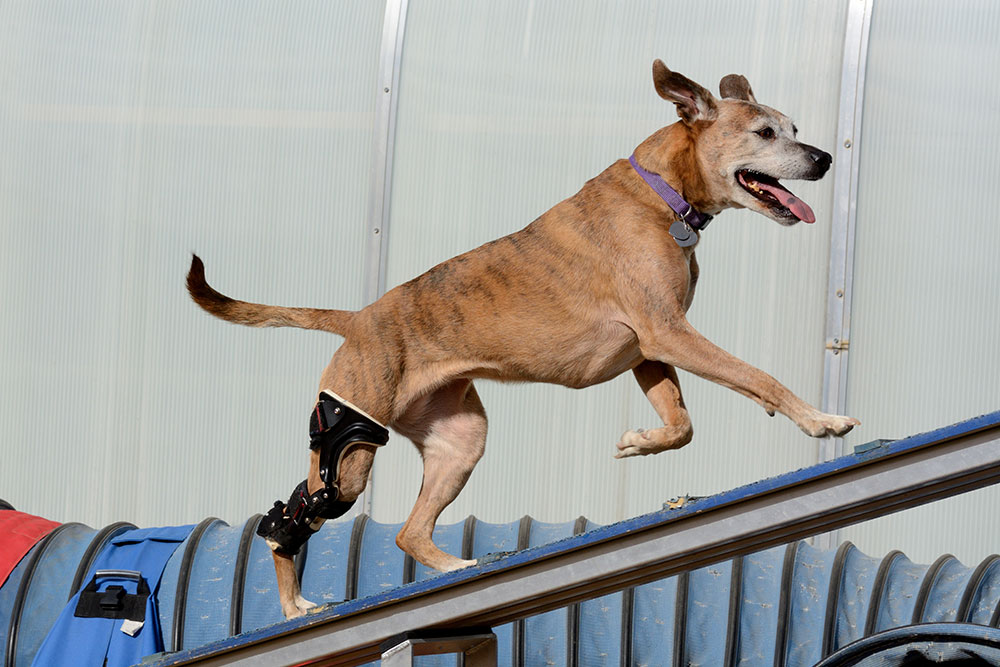
FAQ: CCL Injuries in Dogs
Can a dog recover from a CCL tear without surgery?
Very small dogs, typically under 15 pounds, occasionally stabilize with strict rest and managed activity over several months. For most dogs, particularly those over 30 pounds or those with active lifestyles, surgery produces significantly better long-term outcomes. Conservative management without surgery typically leads to progressive arthritis and lasting functional limitations.
How do I know if it is a CCL tear or just a sprain?
A true sprain usually improves noticeably within a week of rest. A CCL tear does not. Persistent lameness after exercise, swelling, and a toe-touching gait that does not resolve are all reasons to come in for an evaluation.
Will my dog need surgery on the other leg eventually?
Not necessarily, but the risk is real. Studies suggest that 40 to 60 percent of dogs with one CCL rupture will injure the opposite leg within two years. Weight management, consistent conditioning, and protective measures after the first surgery reduce but do not eliminate that risk.
How long before my dog is back to normal?
Most dogs reach their 8-week recheck in good shape and can begin off-leash activity from there, with continued strength gains over the following months. Working dogs or those returning to demanding physical activity may benefit from a longer, more formal rehabilitation program.
A Clear Path Back to Full Function
CCL injuries are serious, but they are also very treatable. The dogs that do best are the ones whose owners recognize the signs early, get a proper diagnosis, commit to the right surgical plan, and follow through on structured recovery. With specialist surgical care available right here at Mid-Valley, your dog does not have to travel far to get what they need.
If your dog is limping or showing any of the signs above, contact our team to schedule an evaluation, or learn more about our surgical services to understand what the process looks like from start to finish.



Leave A Comment