
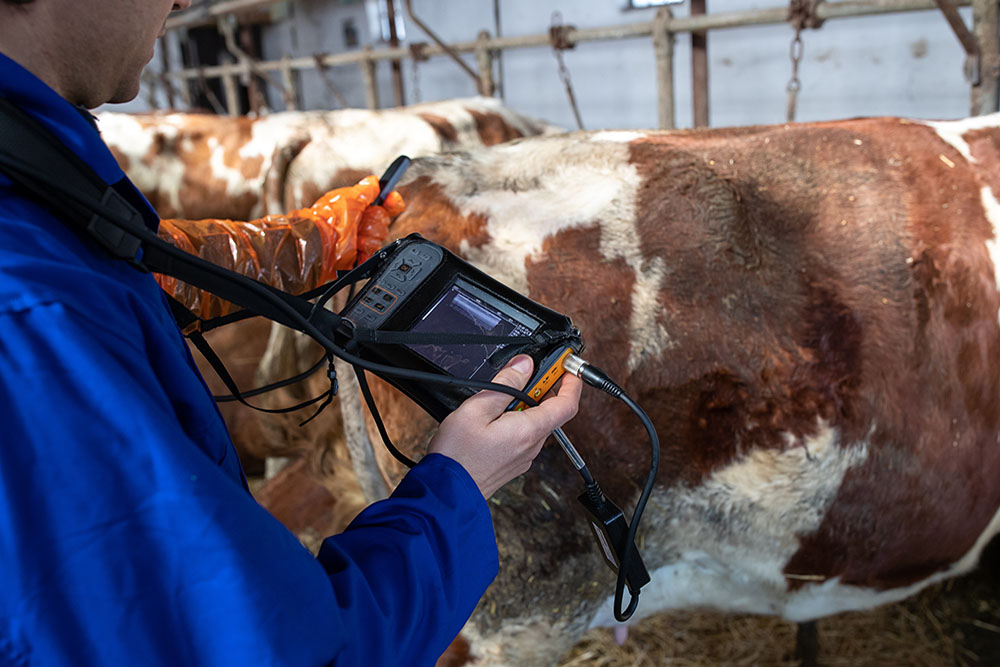
The Power of Ultrasound: Enhancing Reproductive Efficiency in Livestock
Ultrasound has transformed herd management, allowing producers to detect pregnancy, monitor fetal growth, and diagnose reproductive problems early. This technology improves breeding efficiency, reduces costs, and supports healthier, more productive animals.
For livestock producers in Northern California’s farming communities, every breeding season represents a significant investment. Whether you’re managing a dairy herd, beef cattle operation, or sheep flock, knowing which animals are pregnant and when they’ll deliver directly impacts your bottom line and your sanity. Traditional methods of pregnancy detection often meant waiting months for visible signs or relying on less accurate palpation techniques. Today, ultrasound technology provides precise, early answers that help you make informed decisions about feed allocation, breeding schedules, and herd management.
At Mid-Valley Veterinary Hospital, our mixed animal practice combines advanced diagnostic technology with personalized reproductive services to help producers maximize herd productivity and profitability.
How Ultrasound Technology Transforms Livestock Reproductive Management
Achieving Earlier and More Accurate Pregnancy Detection
Traditional pregnancy detection methods in cattle typically require waiting 60 to 90 days after breeding before confirmation. Ultrasound changes that timeline dramatically, allowing veterinarians to confirm pregnancies as early as 28 to 35 days after breeding in cattle and even earlier in small ruminants.
This early detection capability means you can identify open (non-pregnant) females sooner and return them to breeding programs without losing valuable time. Pregnancy determination in cattle through ultrasound provides real-time visualization of the reproductive tract, allowing veterinarians to confirm not just pregnancy status but also fetal viability and approximate gestational age.
The accuracy of ultrasound surpasses manual palpation, particularly in early pregnancy stages. While experienced practitioners can achieve high accuracy with palpation after 45 days, ultrasound provides definitive visual confirmation and reduces the risk of false positives or negatives. This precision matters when you’re making decisions about culling, feeding programs, and facility planning.
Our diagnostic technology capabilities include both in-clinic and mobile ultrasound services, bringing advanced reproductive management directly to your operation. This flexibility means less stress on your animals and more efficient use of your time.
The Economic Impact of Early Pregnancy Diagnosis Through Ultrasound
Reducing Costs and Optimizing Herd Management Decisions
Early pregnancy diagnosis delivers measurable financial benefits throughout your operation. When you know which animals are pregnant within the first month after breeding, you can immediately adjust nutrition programs to match each animal’s needs. Open females don’t require the additional calories and nutrients needed for fetal development, allowing you to optimize feed costs across your herd.
Ultrasound technology in beef cattle operations enables producers to plan calving seasons more precisely, reducing labor costs during busy periods. Knowing expected calving dates allows you to schedule staff appropriately, prepare facilities, and ensure adequate supervision during deliveries.
The ability to identify non-pregnant animals early in the breeding season provides another economic advantage. Rather than feeding and maintaining open females for months before discovering they’re not pregnant, you can make timely decisions about rebreeding or culling. This efficiency directly impacts your operation’s profitability by reducing days to pregnancy across the herd.
For dairy operations, early pregnancy detection means better planning for dry periods and milk production cycles. You can optimize group housing, adjust rations based on pregnancy status, and maintain more consistent milk production throughout the year.
Our team understands the financial pressures facing livestock producers. Through our herd health programs, we work with you to develop reproductive management strategies that maximize return on investment while supporting animal welfare.
Practical Applications of Ultrasound in Livestock Reproductive Programs
Gender Identification and Reproductive Health Monitoring
Beyond basic pregnancy detection, ultrasound provides valuable information for breeding program management. Gender identification through ultrasound becomes possible between 55 and 90 days of gestation in cattle, allowing producers to plan for replacements, adjust marketing strategies, or make breeding decisions for future generations.
The technology’s real strength lies in its ability to detect reproductive problems early. Ultrasound examination can identify conditions such as ovarian cysts, uterine infections, and fetal abnormalities that might otherwise go unnoticed until they cause significant production losses. Early detection of twins in cattle operations, for example, allows for appropriate management decisions since twin pregnancies carry higher risks for both the dam and calves.
Regular ultrasound for pregnancy monitoring throughout gestation helps identify problems with fetal development or placental attachment. This proactive approach means you can intervene when necessary or prepare for potential complications during delivery.
Ultrasound also plays a crucial role in evaluating reproductive tract health in non-pregnant animals. Identifying structural abnormalities, persistent corpus luteum, or other conditions affecting fertility helps you make informed decisions about treatment options or culling.
Our large animal services include comprehensive reproductive evaluations that combine ultrasound technology with hands-on examination and laboratory diagnostics. This integrated approach provides the most complete picture of your herd’s reproductive health.
Using Ultrasound Insights to Improve Calving Outcomes
Better Preparation Leads to Successful Deliveries
Ultrasound examinations during mid to late gestation provide valuable information for preparing for calving. By monitoring fetal growth and position, veterinarians can identify potential problems before labor begins. Oversized calves, abnormal presentations, or other complications can be anticipated and managed proactively.
Accurate gestational aging through ultrasound allows you to predict calving dates within a narrow window, typically plus or minus three to five days. This precision means you can schedule observation periods more efficiently, ensuring someone is available when assistance might be needed. For operations with limited labor, this predictability is invaluable.
Monitoring fetal development throughout pregnancy also helps identify growth restriction or other problems that might require nutritional adjustments or medical intervention. A fetus that’s measuring small for its gestational age might indicate maternal nutrition issues, placental insufficiency, or other problems requiring attention.
The non-invasive nature of ultrasound means you can perform multiple examinations on an individual animal throughout pregnancy without risk to the dam or developing fetus. This ability to track progress over time provides insights that single-point examinations cannot offer.
Mid-Valley Veterinary Hospital’s mobile services bring ultrasound technology to your farm, minimizing stress on pregnant animals while providing the information you need for successful calving management.

Animal Welfare Benefits of Ultrasound Technology in Livestock
Reducing Stress While Improving Overall Herd Health
Ultrasound examination is completely non-invasive, requiring no needles, radiation, or painful procedures. Animals typically tolerate the examination well, especially when performed by experienced veterinarians who understand livestock behavior and handling.
The stress reduction extends beyond the examination itself. By identifying pregnant animals early, you can separate them from the general population when appropriate, reducing competition for feed and minimizing physical stress from aggressive herdmates. Early detection of reproductive problems means animals receive treatment sooner, reducing discomfort and improving outcomes.
Ultrasound technology supports animal welfare and herd health by enabling veterinarians to make accurate diagnoses without subjecting animals to exploratory procedures or prolonged diagnostic periods. When reproductive problems are identified early, treatment options are often less invasive and more successful.
The ability to monitor fetal development throughout pregnancy also supports animal welfare by identifying problems early. A fetus in distress or a pregnancy at risk can be managed proactively, potentially saving both the dam and offspring.
Our team at Mid-Valley Veterinary Hospital prioritizes animal welfare in every aspect of care. From Fear Free handling techniques adapted for livestock to our 24-hour emergency services for urgent reproductive issues, we’re committed to providing compassionate, effective care that respects the animals we serve.
Maximizing Your Herd’s Reproductive Success
Ultrasound technology represents one of the most significant advances in livestock reproductive management available to modern producers. Early pregnancy detection, accurate gestational aging, gender identification, and reproductive health monitoring all contribute to improved efficiency and profitability.
The investment in regular ultrasound examinations pays dividends through reduced feed costs, better breeding program management, improved calving outcomes, and earlier detection of reproductive problems. Combined with comprehensive herd health programs, ultrasound technology helps you build and maintain productive, healthy livestock operations.
Our team at Mid-Valley Veterinary Hospital brings decades of mixed animal practice experience to Northern California’s agricultural community. Whether you need routine pregnancy checks, breeding soundness evaluations, or emergency reproductive services, we’re here to support your operation’s success.
Contact us or schedule a consultation to discuss how ultrasound technology can enhance your herd’s reproductive efficiency.




Leave A Comment