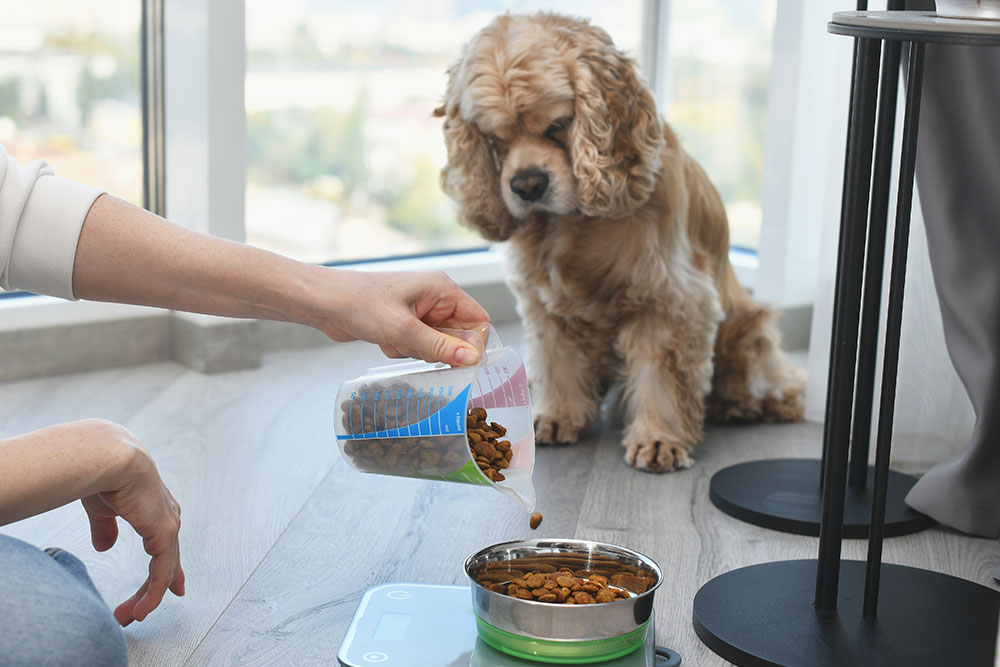
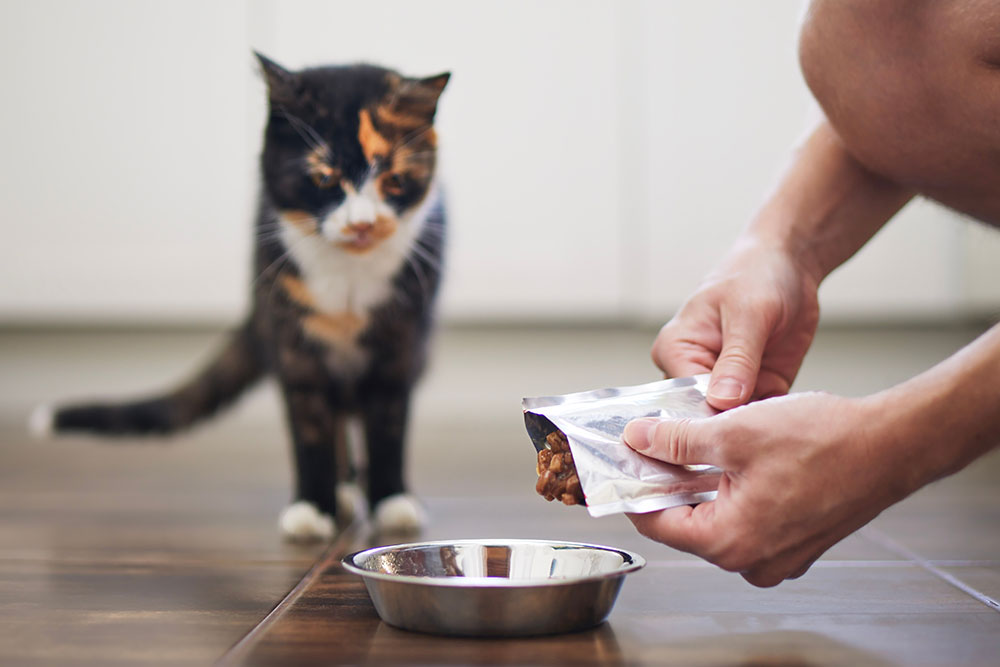
The right daily calorie target for a dog or cat depends on weight, age, activity level, spay/neuter status, and current body condition, which is why the amount printed on the back of the bag is only a rough starting point. A calorie calculator gives you a real daily number built around your specific pet, and feeding to it is one of the few things proven to extend a pet’s healthy years. The hard part is honest accounting: a few training treats, a dental chew, and a scoop of canned food on top of kibble can quietly double what was meant to be a measured meal. With more than half of dogs and cats now overweight or obese, those small extras are the single biggest reason careful households still watch the waistline disappear.
Across Orland and the surrounding farming and college-town families we serve, Mid-Valley Veterinary Hospital keeps weight management grounded in the daily math of feeding the right diet for the right activity level. Our preventive and wellness care for dogs and cats includes body condition scoring, a calorie calculation built around your pet, and in-house bloodwork when weight gain does not match what is going in the bowl. For seniors whose extra pounds are making old joints ache, we layer pain management alongside the feeding plan so comfort and weight loss move together. To get a real number for your pet and a feeding plan you can stick to, give us a call.
The Short Version on Calorie Counting
- Most feeding guides on the bag assume an unspayed, active adult, so the printed amount overfeeds a large share of dogs and cats living in real homes.
- Treats, chews, and table scraps can quietly account for a big slice of a pet’s daily calories, which is why they belong in the count and not on top of it.
- Body condition scoring, not the number on the scale, tells you whether your pet is carrying too much fat or losing muscle they need.
- Slow, steady weight loss is the only safe goal, especially for cats, and a calorie plan built around your pet at Mid-Valley Veterinary Hospital gives you a target you can actually feed to.
What’s Really at Stake in Getting the Calorie Number Right?
Getting the number right matters because pet food packs far more energy into a small volume than it looks like it should, and even a tiny daily surplus turns into real weight over months. An extra ten percent every day, roughly a few kibbles too many, adds up to a pudgy pet by year’s end without a single obvious mistake.
A cup of dense dry food can carry the energy of a full human meal, and canned food, toppers, and “just a little more” all stack on top of that until a snug harness or a comment at a visit makes it real. Calories are only part of how much to feed, because age, activity level, health concerns, and treat habits all move the target. A slow senior cat and a young working dog can weigh the same and need wildly different amounts. Nutrients matter too: protein protects muscle during weight loss, the right fat keeps skin and coat healthy, and fiber helps a pet feel full without piling on energy. Getting the number right for one specific pet is exactly what our nutrition counseling is built to do.
Could a Sudden Weight or Appetite Shift Be Something Medical?
Before you overhaul the feeding plan, rule out a medical reason for the change. Thyroid and other metabolic disease, chronic pain, dental discomfort, and digestive problems can all shift how a pet eats and what they hold onto, and no diet fixes those on its own. Sudden gain or unexplained loss needs a look under the hood.
That look often starts with in-house bloodwork to flag thyroid and metabolic issues. When a pet has stopped chewing on one side or is dropping food, a dental exam under anesthesia with full-mouth X-rays often finds the painful tooth behind a shrinking appetite.
Cats need special caution. Safe weight loss for cats is slow and steady, never a crash diet. A cat that stops eating or drops weight too quickly can develop hepatic lipidosis, a potentially fatal liver condition that makes slow, monitored loss the only safe approach.
For older pets, pain is part of the picture. When arthritis makes every step hurt, a dog or cat moves less, burns less, and gains more. Getting joints comfortable, including with our Class IV laser therapy and monthly injectable options like Solensia for cats and Librela for dogs, lets a senior move enough to support a healthy metabolism.
Excess weight is not just cosmetic. Carrying extra pounds for years raises the risk of a string of serious problems:
- Diabetes: Years of extra weight push up the odds of diabetes mellitus, one of the diseases a healthy body condition helps keep at bay.
- Urinary stones: Extra weight and diet both play into painful urinary stones that may need surgery.
- Joint disease and disc problems: Every extra pound loads the joints and spine, worsening arthritis and raising the risk of intervertebral disc disease.
- High blood pressure: Obesity contributes to systemic hypertension, which quietly stresses the heart, kidneys, and eyes.
- Heat intolerance: In our warm Northern California summers, an overweight pet overheats faster and is at higher risk of heat stroke.
Most of these are far more manageable, or avoided entirely, when weight stays in a healthy range.
Can I Read My Pet’s Weight With My Own Hands at Home?
You can absolutely read your pet’s weight with your own hands. You don’t need a scale to know if your pet is at a healthy weight. Body condition scoring is a hands-on way to judge how much fat and muscle a pet is carrying, and it tells you far more than the scale does. Two dogs can weigh the same while one is lean and one is round. You read it from above, from the side, and by feeling for the ribs and waist.
This matters most in older pets, where a pet holding the same weight but quietly losing muscle is not thriving. A structured body condition scoring (BCS) scale runs from 1-9, underweight (1-3) to obese (8-9).
Here is how to check your own pet at home, ideally once a month:
- From above: Look down at your standing pet. You want a visible waist that tucks in behind the ribs; a straight line or a bulge to the sides means extra weight.
- From the side: The belly should tuck up toward the hips, not hang level or sag.
- By touch: Run your hands along the rib cage. You should feel the ribs easily under a light layer, like the back of your hand. If you have to press to find them, there is too much fat; if they feel sharp and exposed, the pet may be underweight.
| Body condition | What you see and feel |
| Underweight (1-3) | Ribs, spine, and hips stand out; no fat cover; obvious waist tuck |
| Ideal (4-5) | Ribs felt easily under a thin layer; clear waist from above; belly tucks up |
| Overweight (6-7) | Ribs hard to feel; waist barely there; belly starting to sag |
| Obese (8-9) | Ribs buried; no waist; fat pads over hips and at the base of the tail |
Fluffy coats hide a lot, so with long-haired dogs and cats the touch check matters even more than the look. If you are not sure what you are feeling, a hands-on body condition check during a visit lets us show you the difference on your own pet so you can track it confidently at home.
Getting a Real Number Out of a Pet Calorie Calculator
A calorie calculator gives you a solid starting estimate, not a final prescription. It uses your pet’s weight, BCS, and life stage to suggest a daily energy target, the number you feed to and then adjust. Before you start, gather three things: current weight, an honest body condition score, and the calories per cup printed on the bag.
Without calories per cup, you cannot turn a daily target into an actual scoop, so check the fine print near the ingredient list for a line reading kcal per cup or kcal per can. Feed those numbers into an online calorie calculator and you get a starting daily amount. From there, the process is simple:
- Decide on a treat budget: Set aside up to ten percent of the daily calories for treats, then feed the rest as portioned meals.
- Measure, don’t estimate: Use an actual measuring cup or a kitchen scale. Eyeballing is where overfeeding sneaks back in.
- Reassess every few weeks: Watch the waistline and body condition, not just the scale, and nudge the amount up or down.
Reevaluating regularly is the heart of obesity prevention, since a calorie need that fit last month can be wrong once the seasons, exercise, or age change. A dog who hikes all summer needs more than the same dog dozing through a rainy winter. Because a calculator cannot see your pet’s health history or how they actually move, we translate that starting number into real food choices at wellness visits. If you would like a target built around your specific pet, book a weight consultation and we will walk through it together.
Which Sneaky Extras Are Padding the Daily Total?
Hidden calories come from everything that goes into a pet that is not a measured meal, and they are the number one reason careful feeding plans fall apart. The calories in treats add up fast: a 20-pound dog needs only a few hundred calories a day, so a couple of jerky strips and a dental chew can eat up a quarter of that.
The usual culprits:
- Training treats: Easy to hand out by the dozen during a session, and they count even when they are tiny.
- Table scraps: A corner of toast or a bit of cheese means far more on a 10-pound cat than on a person.
- Dental chews: Useful for teeth, but many are calorie-dense, so they belong in the daily budget.
- The multi-person household: One family member feeds a treat, another does the same an hour later, and nobody knows the total. This is the classic reason a “carefully fed” pet keeps gaining.
The good news is that pets respond to the moment and the connection, not the calorie count. A piece of green bean, a baby carrot, or a bit of plain cooked pumpkin lands as a reward just as well as a rich biscuit, without the energy. Swapping high-calorie treats for vegetable-based ones is one of the easiest wins there is, and our team can help you make them part of a weight management plan.
One Habit That Keeps Treats From Blowing the Budget
The simplest treat-control trick is to stop adding calories on top of meals entirely. Each morning, measure your pet’s full daily food into a single container, then use that same kibble as treats throughout the day. Whatever is left at dinner goes into the bowl.
This one habit does a lot of quiet work:
- It caps the total automatically: There is only so much in the container, so treats can never push the day over budget.
- It makes the limit visible to everyone: Anyone in the house can see the food shrinking and knows what’s left.
- It keeps things dead simple: No calorie math at each treat, just one container and one rule.
Dogs and cats care about the reward and your attention, not whether the treat came from a special bag, so most never notice the swap. For households juggling multiple pets or specific weight goals, we can fold this method into a personalized weight management plan so everyone at home is working from the same playbook.
What Makes a Feeding Plan Hold Up Over the Long Haul?
A feeding plan lasts when it can flex with your pet instead of staying frozen. Needs shift with age, weather, activity, and health, so the amount that is perfect in July can be too much by January. Regular monitoring catches small drifts early, before they become real weight.
Adult pets do well with a wellness visit once a year, seniors benefit from being seen twice a year, and weighing or body condition scoring at home between visits gives you an early warning.
Are Prescription Weight-Loss Diets Worth It?
Prescription weight-loss diets are worth it when a pet needs to lose a meaningful amount, because they are built for the job in ways a regular “light” food is not. They go through feeding trials to confirm pets lose fat safely while holding onto lean muscle, and controlled fiber keeps a pet satisfied on fewer calories rather than begging through every evening. When one of these diets is the right call, we can recommend a formula and point you to the dog and cat weight management diets our team can help you order.
Can Puzzle Feeders Really Help With Weight?
Puzzle feeders really do help with weight, in two ways at once: they slow eating and turn a meal into a mental workout. For the dog who inhales dinner in eight seconds, a slow bowl or a scatter of kibble across the floor stretches the meal and cuts the begging that follows. Lasting weight loss in dogs comes from pairing a slow calorie reduction with more daily movement and meals that take effort to earn. Cats work a little differently: they are hunters, so food puzzles, several small meals a day, and a few tosses of kibble down a hallway tap into that drive to chase and work for food. To build feeding goals around your pet and your home, we are glad to talk it through at a visit.
Questions Pet Families Ask Us About Feeding and Weight
My pet always acts hungry. Am I starving them?
A pet who always acts hungry is almost certainly not starving. Dogs and cats are wired to act ravenous, especially breeds bred to work for food, and a pet at a healthy weight will still carry on like they are famished. If the body condition is good and the calories are right, the begging is habit and hopefulness, not starvation. Using the daily-container trick and low-calorie veggie treats usually keeps everyone satisfied without adding weight.
How fast should my pet lose weight?
Slow is safe. For most dogs, aiming for roughly one to two percent of body weight lost per week is a reasonable, healthy pace. Cats should go even slower, since dropping weight too quickly can trigger a dangerous liver condition. Crash diets tend to lose muscle along with fat and often bounce right back. A steady, monitored plan gets there safely, and we can set a realistic timeline based on how much your pet needs to lose.
The bag says to feed more than my vet suggested. Who is right?
The bag is a generic starting point. Feeding guides on the package are built around an average active, unspayed adult, so they overshoot for many spayed, neutered, or less energetic pets. A target tailored to your specific pet’s weight, body condition, and lifestyle is almost always more accurate than the range on the bag. When in doubt, feed to the waistline, not the label, and let us fine-tune the number.
Give Your Pet More Good Years
A healthy body condition is one of the kindest things you can give a dog or cat: easier movement, a lower risk of the diseases that shorten lives, and more happy, active years by your side. Saying no to a hopeful face at dinner is genuinely hard, but the small changes, an honest measuring cup, veggie treats, one container for the day, add up to a real difference over time.
You do not have to sort this out alone. Our team at Mid-Valley Veterinary Hospital will help you set realistic goals, pick the right food, and build a plan that fits your household. For a target built around your pet, reach out with questions and we will help you get started.





Leave A Comment