
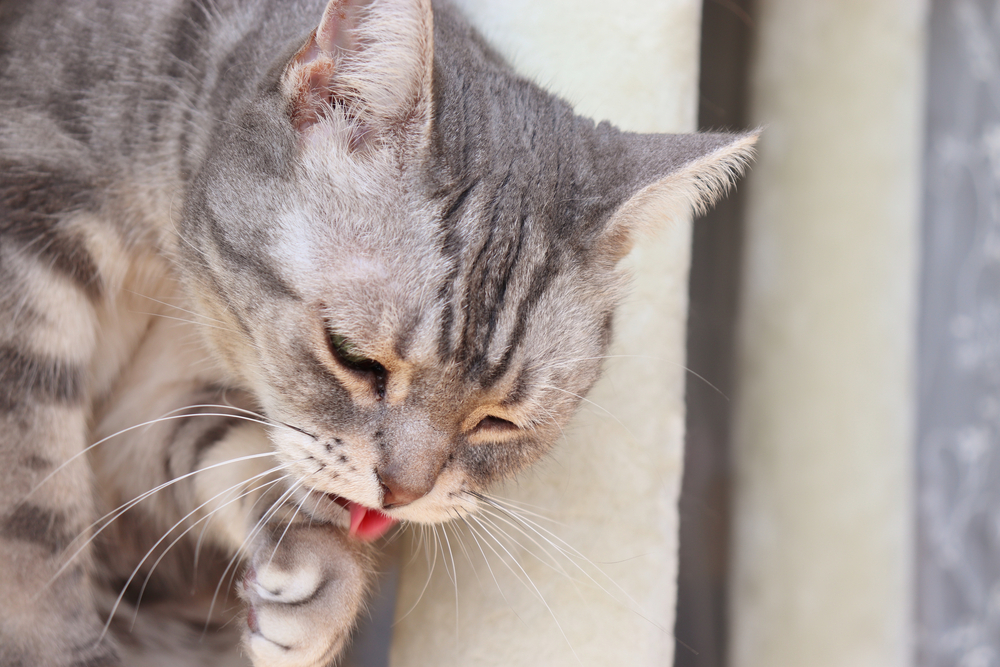
The first question a veterinarian asks about a vomiting dog or cat is usually not what came up but how often, because frequency is what separates a passing stomach upset from a chronic problem. One messy morning in a pet who bounces back and eats normally by evening is almost always just that. Vomiting that shows up more than a couple of times a month, keeps recurring across several weeks, or travels with weight loss, a changing appetite, or stool that swings between normal and loose has crossed the line. From there, answers come from a stepwise path: bloodwork and imaging to rule out the serious causes, a strict food trial, and a gut biopsy when the picture stays cloudy.
Mid-Valley Veterinary Hospital in Orland sees the whole spectrum, from the farm dog who acts normal but vomits every morning to the house cat whose vomiting has quietly stretched across a whole season. We run fecal testing, bloodwork, and abdominal imaging in our own hospital and coordinate with outside reference laboratories when a case calls for deeper testing. We will also help you set up an elimination diet correctly, since a diet trial only gives answers when it is run to the letter. If you have been doing the twice-or-three-times math on the calendar, book a visit and we will read the pattern with you.
Start Here: The Chronic Vomiting Basics
- One bad morning that a dog or cat shrugs off by dinner is almost always nothing, but vomiting more than a couple times a month, or paired with weight loss, appetite changes, or on-and-off diarrhea, has crossed into chronic territory.
- Chronic vomiting is rarely one problem, so answers come from a stepwise path: bloodwork and imaging first, then a strict food trial, and a gut biopsy when the picture stays cloudy.
- A few signs mean emergency, not appointment: vomiting blood, a bloated or painful belly, unproductive retching, or an inability to hold down water.
- Finding the root cause can take more than one visit, and that’s normal, since each test rules something out and narrows toward a diagnosis we can treat.
When Does Vomiting Cross From Normal to Worth a Vet Visit?
A single upset stomach that resolves on its own rarely needs anything from us. The worrying version repeats more than a couple of times a month, keeps returning over several weeks, or travels with weight loss, a shifting appetite, or diarrhea.
What Can the Look and Timing of Vomit Tell You?
Before a single test runs, what your pet brings up and how soon after eating tell us plenty. Note the timing and frequency, grab a quick video when you can, and jot down what it looked like; the types of vomit sort into a handful of telling categories. One distinction matters early: food that comes back up almost effortlessly, with no heaving, may be regurgitation from the esophagus rather than true vomiting, which points at a weakened, enlarged esophagus instead of the stomach.
| What you see | What it may point to |
| Yellow or green bile | An empty stomach or early-morning bile buildup |
| Undigested food | A meal eaten too fast, or regurgitation rather than true vomiting |
| Dark, coffee-ground flecks | Older blood from higher in the tract, sometimes an ulcer |
| Bright red blood | Fresh bleeding in the stomach or esophagus |
| Foamy white liquid | An empty, irritated stomach |
Which Vomiting Signs Mean It’s Time to Book a Visit?
The line between watchful waiting and picking up the phone comes down to a handful of signs: lack of appetite, unexplained weight loss, a bump in thirst or urination, low energy, or diarrhea riding along. Senior pet health often turns on subtle early changes, and in an older cat or dog the organ diseases that arrive with age frequently show up first as chronic vomiting.
When Is Vomiting an Emergency?
Some vomiting can’t wait for the next open slot. Call us right away during our regular hours, or head to the nearest emergency veterinary hospital if we’re closed, when you see any of these:
- Blood in the vomit: bright red, or dark and coffee-ground in texture.
- A swollen, hard, or painful belly: especially with restlessness or a hunched back.
- Unproductive retching: repeated heaving that brings nothing up, which can signal a life-threatening stomach twist in deep-chested dogs.
- Can’t keep water down: nonstop vomiting that slides fast toward dehydration.
- Severe lethargy or collapse: a pet who’s limp, weak, or hard to rouse.
- A very young or very old pet: puppies, kittens, and seniors with other symptoms lose ground quickly.
What Causes Chronic Vomiting in Dogs and Cats?
Chronic vomiting is rarely a single-system problem, which is why the cause can sit anywhere from the food bowl to the kidneys to the gut lining itself. Pinning it down can take more than one visit, and our team stays on the case with you until the picture comes clear.
How Do Food and Dietary Indiscretion Trigger Vomiting?
Food is one of the most common contributors to chronic vomiting and one of the last things families think to question. A true food allergy is an immune reaction to a specific protein, while an intolerance is more of a digestive mismatch. Constantly switching foods only makes the triggering ingredient impossible to spot.
Then there’s everything a pet eats that never came from a bowl. Raiding the trash, grabbing a snack off the sidewalk, and grazing on goose or rabbit droppings mid-walk land plenty of dogs and cats in our exam room. Around Orland, orchard ground and open pasture widen the menu for any dog with room to roam. A swallowed sock or small toy doesn’t always announce itself, and a partial blockage can cause intermittent vomiting for days while enough food slips past to muddy the picture, which is one reason gastrointestinal obstructions are easy to miss. When something lodges without fully sealing the gut, the fix may be surgically removing the object.
Which Body-Wide Illnesses Show Up as Vomiting?
The stomach is sometimes just the messenger for an illness well outside the GI tract, and treating the symptom without finding that source won’t hold.
- Kidney disease: As the kidneys’ filtering power fades, waste builds up in the bloodstream until nausea sets in, which is why chronic kidney disease sits near the top of this list.
- Liver and gallbladder disease: When the liver struggles or bile backs up, toxins it normally clears linger and turn the stomach.
- Hyperthyroidism: An overactive thyroid, common in older cats, revs the whole body and often brings vomiting, weight loss, and a ravenous appetite together.
- Pancreatitis: When this digestive organ becomes inflamed, it irritates everything around it, and pancreatitis tends to pair vomiting with a hunched, tender belly and a sudden loss of appetite.
What GI Diseases Cause Chronic Vomiting?
Once systemic causes are ruled out, the search moves inside the gut itself, where inflammatory bowel disease (IBD) turns up as one of the most common findings. In cats, IBD and lymphoma may first appear as more frequent hairballs. Telling these apart matters, because the treatments aren’t interchangeable, and the right call comes from pairing test results with what you’ve noticed at home.
| GI condition | Description |
| Inflammatory bowel disease | Long-running immune inflammation of the gut lining |
| Intestinal lymphoma | A cancer of gut lymph tissue, common in older cats, easy to confuse with IBD |
| Gastric ulcers | Raw, eroded spots in the stomach wall that can bleed |
| Bilious vomiting syndrome | Bile irritating an empty stomach, often early morning, in dogs |
| Pyloric stenosis | A narrowed stomach outflow that slows emptying, more often in dogs |
| Gastric cancer | An uncommon but serious stomach tumor, more often in older dogs |
Can Stress or Eating Too Fast Make a Pet Throw Up?
Stress and speed-eating can each trigger real vomiting, and both fool families because they look exactly like a medical problem. Neither shows on bloodwork, so the history you give us often cracks the case.
Scarf and barf. Some pets treat mealtime like a race, especially in multi-pet homes or after a rough start where food was never guaranteed. A pet that scarfs a meal and brings it right back up untouched needs a structural fix rather than medication, and slowing the pace with interactive feeders is often all it takes. Feeding pets separately and offering smaller, more frequent meals helps too.
Stress and anxiety. Chronic stress is an underappreciated trigger for GI upset, and feline stress in particular can produce vomiting identical to a medical cause, often surfacing alongside overgrooming, hiding, or a change in how a cat interacts with the household. A new baby, a move, a schedule change, or tension between pets can all be enough. Dogs feel it too, though cats tend to show it more with their stomachs.
What Happens During a Chronic Vomiting Workup?
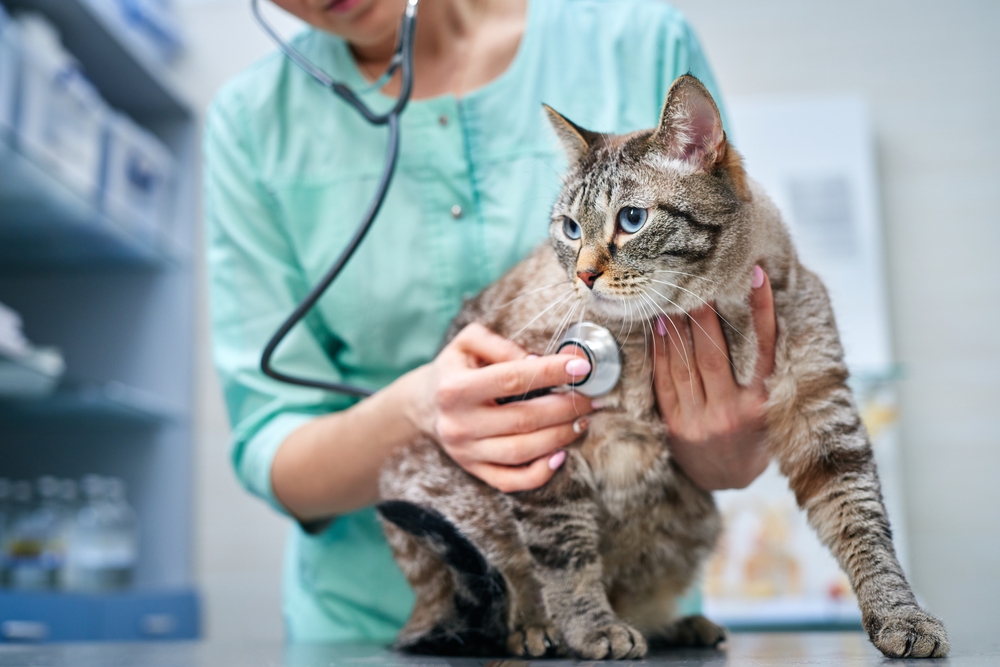
The workup starts low-tech, with a thorough history and a nose-to-tail exam, then moves to baseline testing that rules out the biggest concerns first. Most of it happens right here, since in-house bloodwork and imaging let us check organ function, screen for parasites, and look inside the belly without sending you elsewhere.
Here’s what each piece checks:
- Bloodwork: A chemistry panel and blood count read kidney and liver values, blood sugar, and signs of inflammation or infection.
- Urinalysis: Testing the urine adds detail on kidney function and hydration that blood alone can miss.
- Fecal testing: A stool sample screens for the parasites and infections that quietly drive GI upset.
- Imaging: An x-ray shows shapes and gas patterns, while ultrasound reads the actual layers of the stomach and intestinal wall along with the texture of organs like the liver and pancreas. A barium study, where your pet swallows a contrast liquid, can outline a blockage a plain film hides.
Routine care pays off here. When we already have wellness baselines on file from healthier days, a shifted value stands out immediately instead of leaving us to guess what normal looked like for your pet.
How Does a Food Trial Pinpoint a Diet Problem?
When baseline testing comes back clean, an elimination diet is the next move, feeding one carefully chosen food and nothing else for several weeks. A structured diet trial only delivers a clear answer with total compliance: no treats, no flavored medications, and no sharing from another pet’s bowl.
Two diet types do the job. A novel protein diet uses a meat your pet has likely never eaten, such as rabbit, venison, or kangaroo, so the immune system has nothing familiar to react to. A hydrolyzed protein diet takes ordinary proteins and breaks them into pieces too small for the body to recognize.
One warning saves wasted effort: over-the-counter limited-ingredient foods aren’t built for a real diagnostic trial. They’re made on shared equipment, and trace amounts of other proteins can sneak in, enough to blur the result.
When Is Endoscopy or a GI Biopsy the Next Step?
When testing and a clean food trial still haven’t named the problem, the next step is to look at the gut lining directly and sample it. Endoscopy and exploratory surgery both get there under anesthesia, and the tissue they collect is what settles the diagnosis.
Is Endoscopy Right for My Pet?
Endoscopy passes a thin, flexible camera down the throat to see the esophagus, stomach, and start of the small intestine, pinching off small tissue samples for biopsy along the way. It’s minimally invasive with a typically quick recovery, and it fits when the lining needs a direct look or to evaluate structure abnormalities. Because this is a specialized procedure, we’ll talk through where it can be performed and help coordinate the referral.
What Do Exploratory Surgery and a GI Biopsy Add?
Some answers only come from a direct look inside. Going in surgically lets us examine the stomach, intestines, liver, and pancreas in one visit. A GI biopsy collected during an open exploratory procedure samples the full thickness of the intestinal wall at several sites at once, catching disease a shallow endoscopic pinch can miss. It’s the approach we recommend when imaging flags an abnormality, when a blockage or mass needs to come out, or when only deep tissue gives a firm answer, and abdominal surgery makes all of that possible in one procedure.
What Do Biopsy Results Reveal?
The samples go to a pathologist, and the view under the microscope is what separates inflammatory bowel disease from intestinal lymphoma, other GI cancers, infections, and inflammatory patterns that look identical from the outside. A firm tissue diagnosis lets us aim treatment precisely instead of guessing.
How Does Treatment Change Based on the Diagnosis?
Treatment follows the diagnosis, so the workup isn’t busywork; it’s what picks the plan. We map out the specifics with you once we know which path fits.
Managing Food-Responsive Vomiting
When the food trial fixed things, treatment is simply to keep doing what worked, which is easier said than done in a house full of people and pets. Consistent rules about treats and table food, a plan for holidays and travel when routines slip, and a habit of checking labels when a formula quietly changes all keep a food-responsive pet steady.
Managing IBD
Inflammatory bowel disease usually takes a combination approach. Anti-inflammatory or immunosuppressive medication, often starting with a steroid like prednisone, calms the overactive gut while a tailored diet takes pressure off it. Every pet responds differently, so doses and food get adjusted over time based on how yours is doing, not a fixed script.
Treating a Systemic Cause
When a body-wide illness is the driver, the focus shifts to that condition, and the vomiting usually eases as the underlying problem comes under control, whether that means stabilizing kidney disease, managing an overactive thyroid, or calming a bout of pancreatitis.
Your Chronic Vomiting Questions, Answered
Is it normal for my cat to cough up hairballs every week?
A hairball once a month or so isn’t concerning, but a weekly one is. Frequent hairballs can mean your cat is over-grooming, or that the gut isn’t moving hair through the way it should, which loops right back to the conditions behind chronic vomiting. When they come with retching, a poor appetite, or weight loss, that’s worth a look rather than a shrug. Regular grooming and a hairball-control diet or supplement often settle the routine cases.
My dog throws up yellow bile every morning before breakfast, is that a problem?
That early-morning yellow is often bilious vomiting syndrome, where bile pools in an empty stomach overnight and irritates the lining. It’s common and usually not dangerous, and it often improves with a small bedtime snack so the stomach isn’t empty for so long. Still, the same pattern can overlap with other issues, so if it keeps up or your dog seems off, let us take a look.
How long does it take to find out why my pet keeps vomiting?
It varies, and honestly it can test your patience. Some cases resolve at the first visit when bloodwork or a fecal test names the culprit. Others move in steps: baseline testing, then a multi-week food trial, then a biopsy if the picture stays cloudy, which can stretch across a couple of months.
Finding the Answer for Your Vomiting Dog or Cat in Orland
Living with a pet who keeps getting sick without knowing why is genuinely draining, and the not-knowing is often the hardest part. The reassuring news is that a patient, methodical approach almost always gets there, one ruled-out cause at a time. From family farm dogs to indoor cats across Orland and the Chico area, our veterinarians bring the same thorough care to every stubborn GI case. If your dog or cat has crossed that vomiting threshold, reach out and we’ll start reading the pattern together.




Leave A Comment